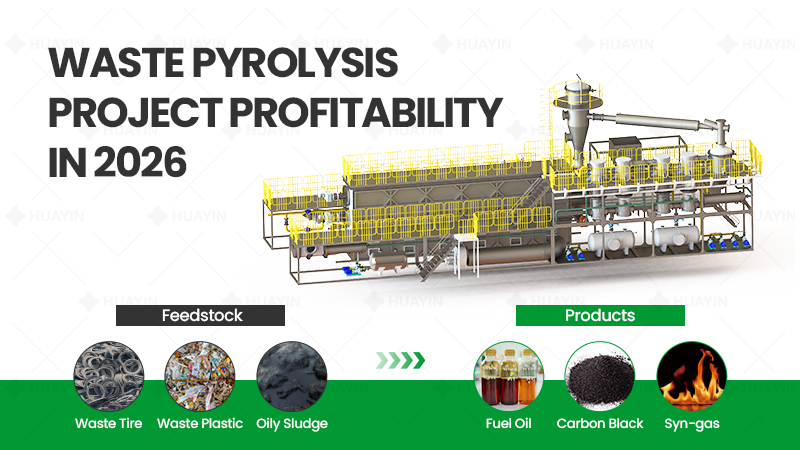
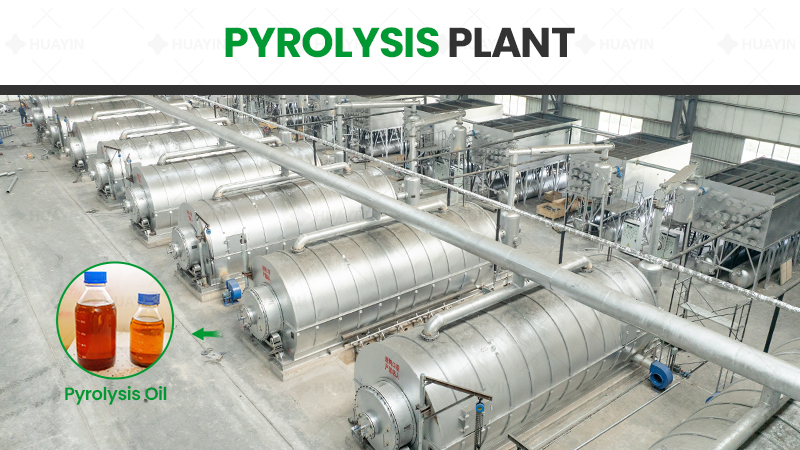
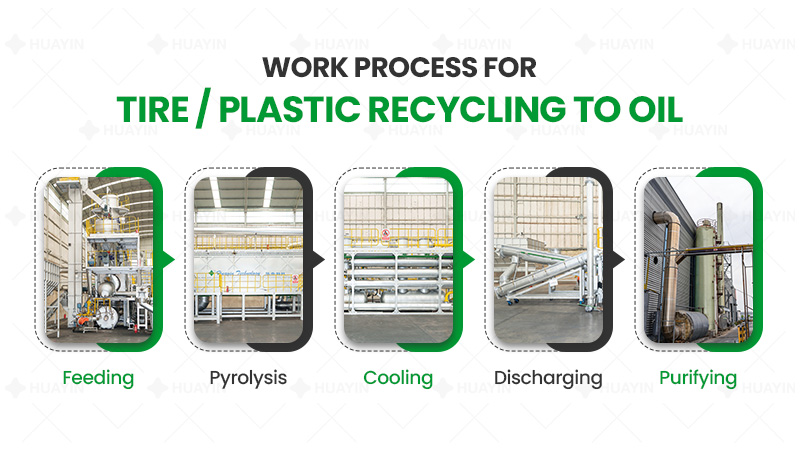
Temperature is one of the most important operating parameters in a plastic pyrolysis plant. During pyrolysis, plastic waste is heated in an oxygen-free environment, causing its polymer chains to break down into hydrocarbon vapors. These vapors are then cooled and condensed into pyrolysis oil, while non-condensable gas and solid residues may also be produced.
However, higher temperature does not always mean higher plastic pyrolysis oil yield. The relationship between temperature and product distribution depends on the type of plastic, heating conditions, vapor residence time, reactor design, and condensation efficiency. Therefore, selecting and maintaining a suitable temperature range is essential for stable pyrolysis oil production.
How Temperature Affects Plastic Pyrolysis Oil Yield?
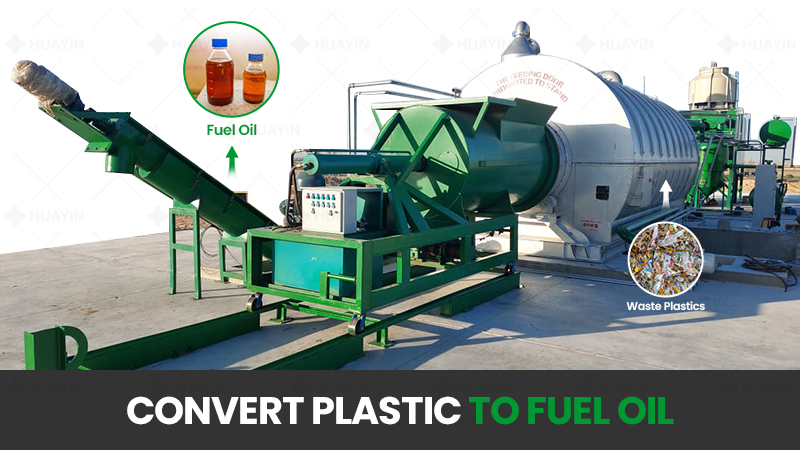
At relatively low temperatures, plastic may not completely decompose, resulting in slower pyrolysis, incomplete conversion, and lower oil production efficiency. As the temperature increases to a suitable operating range, polymer chains break down more efficiently and produce more hydrocarbon vapors, which can be condensed into liquid pyrolysis oil. However, continuously increasing the temperature is not necessarily beneficial. Excessive temperature can promote secondary cracking, breaking down hydrocarbons that could otherwise condense into oil into lighter compounds and non-condensable gases. As a result, gas production may increase while liquid oil yield decreases. Therefore, the goal of a plastic pyrolysis plant is not to operate at the highest possible temperature, but to maintain an appropriate temperature range that supports efficient decomposition while minimizing secondary cracking.
Temperature requirements also vary depending on the type of plastic being processed. PE, PP, and PS have different molecular structures and thermal decomposition characteristics, so their optimal pyrolysis conditions may differ. Mixed plastic waste can be more challenging because different polymers may decompose at different stages. For this reason, the operating temperature should be selected according to the actual feedstock composition, reactor design, and desired product distribution to achieve stable and efficient pyrolysis oil production.
FAQs About Plastic Pyrolysis Oil Yield
1. Does higher temperature increase plastic pyrolysis oil yield?
Not always. Increasing temperature can improve plastic decomposition, but excessive temperature may cause secondary cracking, converting more hydrocarbons into non-condensable gas. The optimal temperature depends on the plastic type and process conditions.
2. What temperature is used for plastic pyrolysis?
There is no single temperature suitable for all plastic waste. PE, PP, PS, and mixed plastics can require different operating conditions. The appropriate temperature should be determined according to feedstock composition, reactor design, and target products.
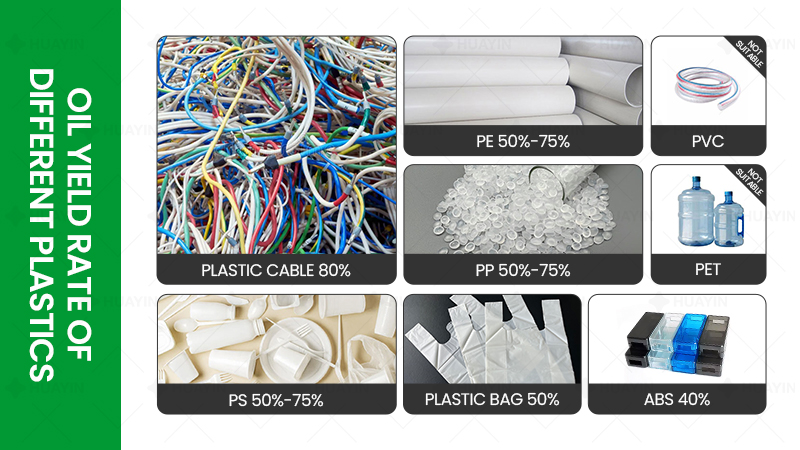
3. Which plastic produces the most pyrolysis oil?
Polyolefin plastics such as PE and PP are commonly considered suitable feedstocks for pyrolysis oil production because of their hydrocarbon content. However, actual oil yield depends on plastic composition and operating conditions.
4. Can mixed plastics be processed in a pyrolysis plant?
Yes, suitable mixed plastic waste can be processed, but its composition should be evaluated first. Different polymers can have different decomposition behaviors, which may affect temperature requirements and final product distribution.
For more information, looking forward to your inquiry!