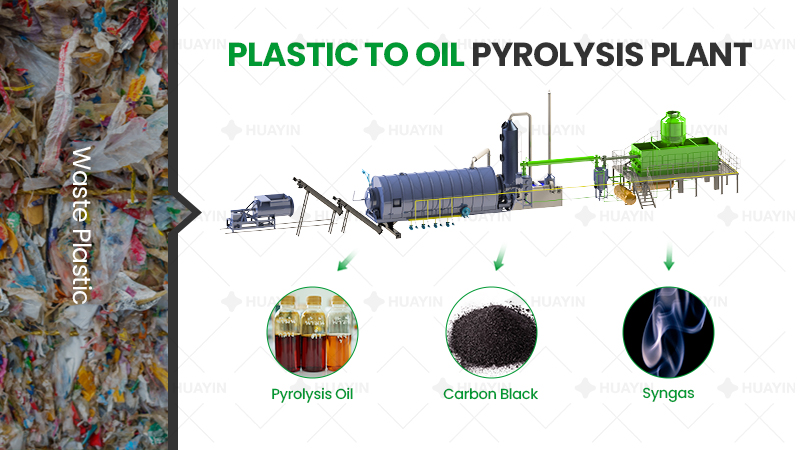
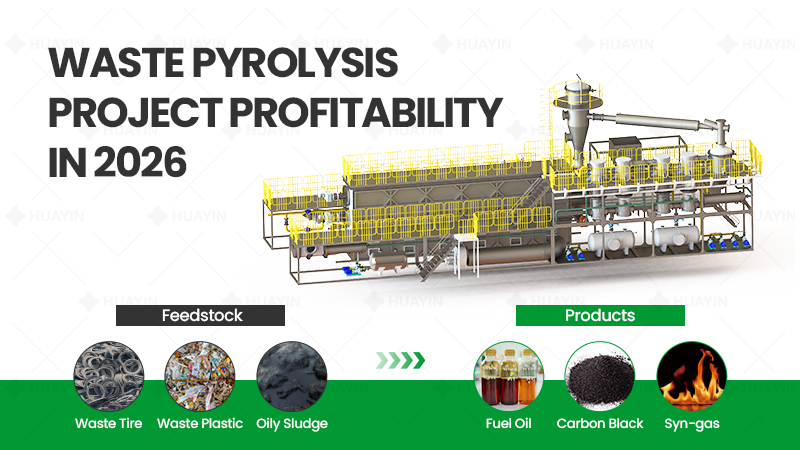
As more solar panels reach the end of their service life, the recycling of photovoltaic (PV) waste is becoming an important issue worldwide. Traditional disposal methods such as landfill, incineration, and mechanical dismantling often face challenges in material separation and resource recovery. To address these challenges, pyrolysis technology is emerging as an efficient solution for processing waste solar panels and recovering valuable materials.
How Does the Solar Panel Pyrolysis Process Work?
The solar panel pyrolysis process begins with feeding waste PV panels into a pyrolysis reactor. Under controlled temperatures and an oxygen-free environment, organic materials such as EVA film and backsheet layers are thermally decomposed. As these binding materials break down, glass and metal-containing components can be separated more easily for further recycling. And the generated oil gas will go through the condensation system, and we can obtain the pyrolysis oil.
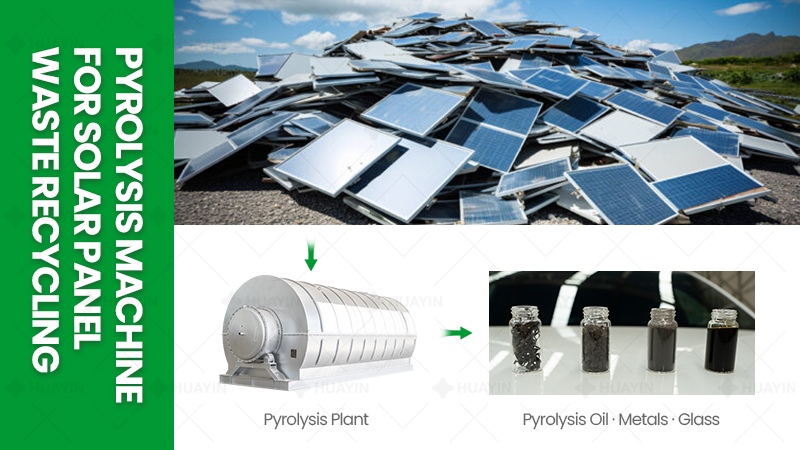
What Can We Get from Solar Panel Waste After Pyrolysis?
Glass (70–75%)
Glass is the largest recovered material from waste solar panels. After cleaning and processing, it can be reused in glass manufacturing, building materials, insulation products, and other industrial applications.
Aluminum (8–10%)
The aluminum frame can be recovered and sent directly to metal recycling facilities for reuse in construction, transportation, and manufacturing industries.
Silicon (3–5%)
Recovered silicon wafers can be further processed and refined for use in the photovoltaic industry, semiconductor manufacturing, and other high-tech applications.
Copper, Silver, and Other Valuable Metals (<1%)
Although present in relatively small quantities, these metals have high economic value and can be extracted and reused in electrical, electronic, and renewable energy industries.
Pyrolysis Oil (2–8%)
Produced from the decomposition of EVA and backsheet materials, pyrolysis oil can be used as an alternative industrial fuel or further refined for energy applications.
Syn Gas (2–8%)
The non-condensable gas generated during pyrolysis has a high calorific value and can be recycled as fuel for the pyrolysis system, helping reduce operating energy consumption.
Proven Through Solar Panel Pyrolysis Testing
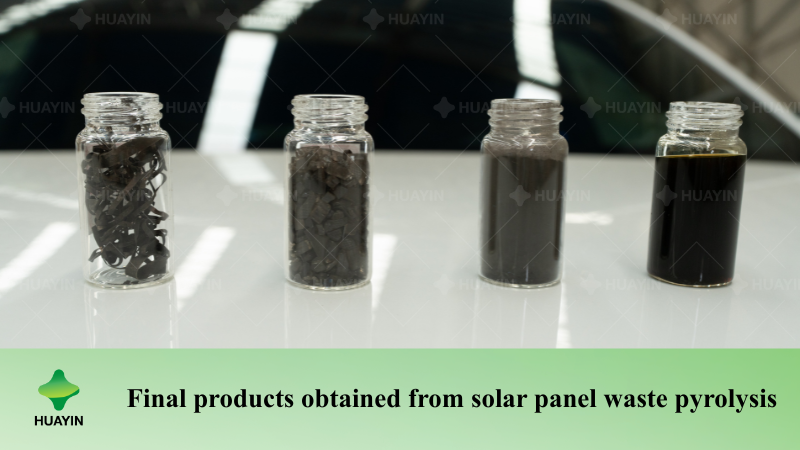
To verify the effectiveness of this recycling method, Huayin conducted pyrolysis tests on waste solar panels using our small-scale pyrolysis machine, which achieve great success:
All in all, pyrolysis technology is an effective recycling solution for solar panel waste, which can convert waste into valuable products using environmental technology. With more than 30 years of experience in pyrolysis machine researching and manufacturing, our equipment can process wide feedstocks in addition to the solar panel waste and common tire plastic waste, and we can also recommend suitable equipment configurations based on your material type and processing requirements.
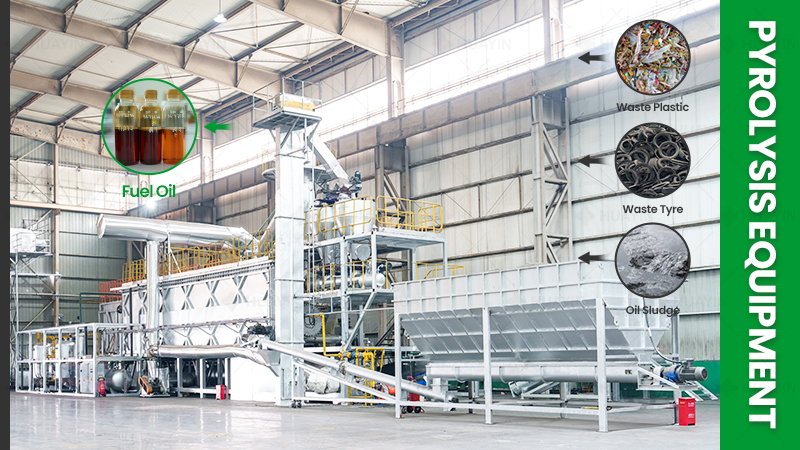
Interested in solar panel waste pyrolysis project or other waste recycling pyrolysis solution, welcome to send your inquiry to Huayin directly!