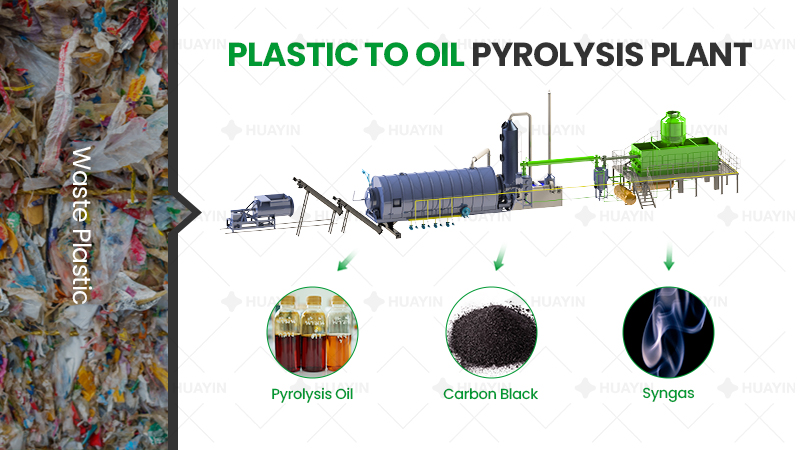
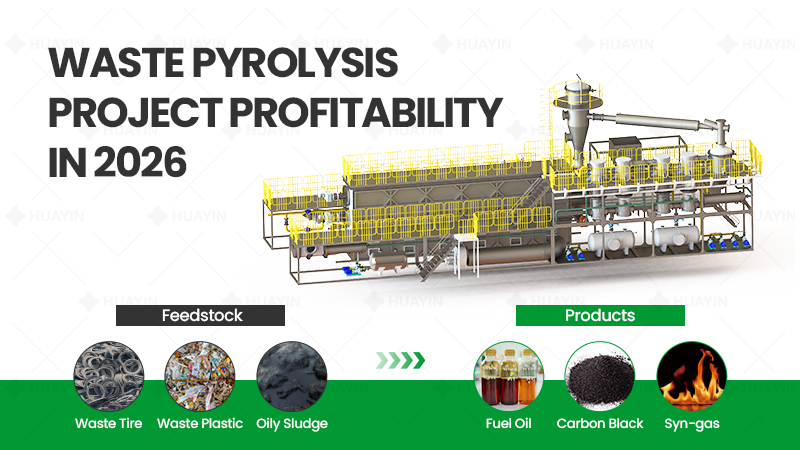
Pyrolysis recycling efficiency refers to the overall ability of a pyrolysis plant to convert waste materials such as waste tires, waste plastics, and rubber into valuable end products including pyrolysis oil, carbon black, and steel wire. In industrial applications, this efficiency is typically evaluated by pyrolysis oil yield, solid residue rate, and whole production efficiency. A higher recycling efficiency means that more useful output can be obtained from the same amount of raw materials, which directly improves the economic performance and sustainability of a pyrolysis project.
The recycling efficiency of a pyrolysis system is influenced by multiple interconnected factors rather than a single parameter. One of the most important factors is the quality of the raw materials. Feedstock with high moisture content, excessive impurities, or inconsistent particle size will significantly reduce thermal cracking efficiency and lead to lower oil yield. In contrast, well-pretreated materials that are properly crushed, sorted, and dried can ensure smoother pyrolysis reactions and more stable output. This is why industrial-scale pyrolysis plants often include pretreatment processes to improve overall system performance and increase pyrolysis oil recovery efficiency.

Another critical factor is temperature control during the pyrolysis process. Pyrolysis typically operates within a temperature range of 300°C to 450°C, and maintaining stable heating conditions is essential for efficient thermal decomposition. If the temperature is too low, the cracking process becomes incomplete, resulting in lower oil yield and higher solid residue. If the temperature is too high, it may lead to excessive gas production and reduced oil quality. Advanced pyrolysis systems use PLC automatic control to maintain stable reactor temperatures, ensuring consistent pyrolysis reaction efficiency and improving both oil yield and product quality.
In addition to the temperature, the condensation system is another crucial component that directly affects pyrolysis oil yield. Even if the pyrolysis reaction is fully completed, poor condensation efficiency will result in oil vapor loss and reduced recovery rate. High-performance condensation systems typically use multi-stage cooling units and optimized heat exchangers to ensure that pyrolysis gas is effectively converted into liquid oil. A well-designed oil-gas separation system not only increases oil recovery efficiency but also improves the overall stability of the pyrolysis plant.
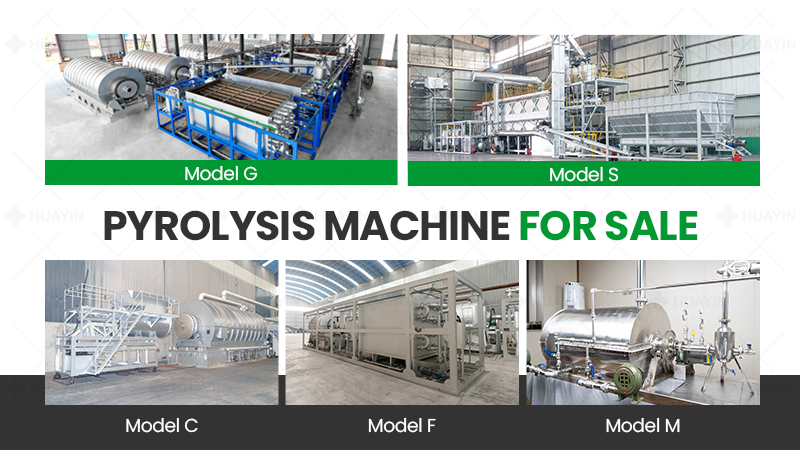
Also, different types of pyrolysis equipment show different levels of recycling efficiency. Batch pyrolysis systems are relatively simple and stable but have lower automation levels and moderate efficiency. However, fully continuous pyrolysis plants generally achieve the highest recycling efficiency due to their continuous feeding and discharging process, stable thermal control, and optimized heat utilization. For large-scale industrial production, continuous systems are widely considered the most efficient solution in terms of both oil yield and operational cost.
In conclusion, pyrolysis recycling efficiency is determined by several factors. A well-optimized pyrolysis plant can significantly increase oil yield, improve energy utilization efficiency, and enhance overall economic returns. As a professional pyrolysis equipment manufacturer, Huayin focuses on advanced reactor design, intelligent control systems, and high-efficiency condensation technology to help customers achieve stable operation and maximum recycling performance. For more details, just leave your inquiry!